Senior Unity & XR Software Engineer · Technical Lead
Senior Unity & XR Engineer building production-ready systems across platforms.
Cross-Platform SDK Integration · Industrial Simulation
· Real-Time 3D
I am a Senior Unity & XR Software Engineer and Technical Lead with
6+ years building maintainable, production-ready cross-platform
systems across Unity XR, industrial simulations, multiplayer applications, and Epic Online Services
SDK integrations.
I combine hands-on C# development, native plugin debugging, build-process optimization, reusable
architecture, and technical documentation with Agile delivery, mentoring, team coordination, and
stakeholder communication from planning and architecture through validation and
production release.
Technical LeadArchitecture, mentoring and delivery
Selected work
Selected projects and case studies
Industrial VR · Vehicle Simulation
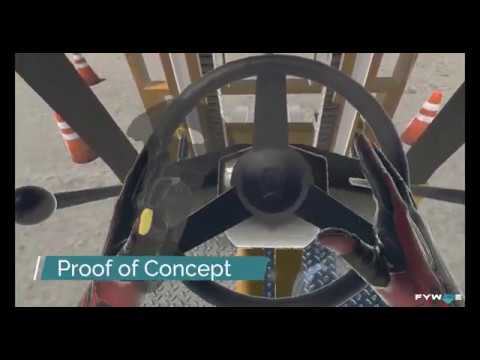
Forklift Operation Training
Physics-driven VR simulation for forklift operation, material handling, route navigation, and safety-oriented driving.
Role
Sole Unity/XR Developer - complete PoC ownership.
Platform
HTC Vive Pro · PCVR.
Key Engineering
Vehicle Physics · Dynamic Center of Mass · Fork Mechanics · Training Validation
Outcome
Delivered a complete training PoC with load-dependent vehicle behavior, material-handling mechanics, route validation, collision feedback, and VR comfort improvements.
A playable 3D multiplayer shooter prototype where up to four players create or join online rooms, select unique characters, and compete inside a synchronized industrial arena.
Role
Unity Gameplay & Multiplayer Developer.
Platform
Windows PC · Photon Cloud.
Key Engineering
Real-Time Networking · Character Synchronization · Projectile Combat · Match State Management.
Outcome
Built a functional multiplayer gameplay loop integrating named rooms, four selectable characters, synchronized movement and animations, projectile combat, health, respawning, and victory conditions. The project remains under continuous improvement.
Delivered a functional AR robotics prototype that converts interactive target movement into real-time UR5 joint visualization for training and technical demonstrations.
Shooter Arena is a competitive multiplayer prototype centered on matches for up to four participants. Players can create or join a named room, select one of four available characters, and fight inside an industrial arena until only one active player remains.
The project combines gameplay programming, real-time networking, user-interface development, animation synchronization, additive scene management, and full match-flow control.
Role & Ownership
I developed the prototype’s core systems in Unity, including the Photon connection, room creation and joining, synchronized character selection, network spawning, player movement, rotation, shooting, damage, health, animation states, respawning, and victory or defeat resolution.
I also integrated the user interface, control instructions, loading and result screens, background audio, and the transition flow between the menu, gameplay systems, and industrial environment.
Problem
A multiplayer shooter requires every client to maintain a consistent representation of the match. Player positions, rotations, animations, projectiles, health values, character selections, and victory states must remain coordinated across different devices.
The experience also needed to prevent duplicate character selections and preserve a coherent match flow when a player took damage, was eliminated, respawned, or left the room.
Engineering Challenge
Maintain a coherent real-time match for up to four players while coordinating local and remote movement, exclusive character selection, projectile collisions, damage, health, elimination, respawning, and last-player-standing detection.
These systems also needed to integrate with a clear user interface and a sufficiently large 3D environment for dynamic multiplayer encounters.
Multiplayer Match Flow
From server connection and character selection to synchronized combat and match resolution.
Player launches the game
Connect to Photon Cloud
Room Management
Create Named Room
Join Existing Room
Online Room · Up to 4 Players
Synchronized Character SelectionMar · Alien · Alan · Mouse
Photon PUN provides the project’s online communication layer. Server connection, named-room management, player spawning, and match-state updates are separated into focused components that organize the complete multiplayer lifecycle.
Rooms support up to four participants and use Photon Custom Properties to preserve information such as each player’s selected character and active state.
Synchronized Character Selection
The project includes four selectable characters: Mar, Alien, Alan, and Mouse. Character choices are communicated through Photon RPCs and removed from the available list to prevent another participant from selecting the same character.
When a participant leaves the room, the corresponding character becomes available again.
Networked Movement & Animation
The local player controls movement, rotation, and gravity through a Character Controller. Position and rotation data are transmitted across the network and interpolated on remote clients to produce smoother motion.
Running and death states are also synchronized so every participant observes consistent character animations.
Projectile Combat & Health
Each character can fire physical projectiles with configurable speed, fire rate, and lifetime. Projectile collisions identify the affected player and request damage through Photon RPCs.
Every player starts with five health points and has a visual interface that updates as damage is received.
Match Lifecycle
The system manages random spawning across four arena positions, player elimination, respawning, and the active state of every participant.
When only one active player remains, the victory screen displays the winning character. Eliminated players receive a defeat screen before leaving the room.
Environment & User Experience
The match takes place in an industrial arena built with modular structures, walls, lighting, and collision boundaries. The complete flow includes room management, character selection, gameplay instructions, a loading screen, background music, and match-result screens.
Additive scene management separates the menu, gameplay systems, and environment, keeping the project flow more modular and organized.
Outcome
The project establishes a functional foundation for a multiplayer shooter: online connectivity, rooms for up to four players, exclusive character selection, synchronized movement and animations, projectile combat, health, respawning, and victory and defeat conditions.
Shooter Arena is currently a playable prototype and remains under continuous improvement, with ongoing work focused on stronger network reliability, gameplay polish, clearer user feedback, and preparation for a stable distributable build.
Continuous Improvement
The next development iterations are focused on strengthening the multiplayer foundation and improving the overall player experience.
Strengthen projectile and damage authority across the network.
Improve reconnection and player-disconnection handling.
Refine respawning and match-state reset behavior.
Add clearer feedback for room creation and joining errors.
Consolidate player controls through Unity’s Input System.
Improve camera behavior, impact feedback, visual effects, and audio.
Introduce scoring, a match timer, and additional game modes.
Optimize the industrial environment and test under different network conditions.
Prepare a stable Windows build and a public gameplay demonstration.
Technology Stack
Unity 6 · C# · Photon PUN 2 · Photon Cloud · Universal Render Pipeline · Unity Physics · Character Controller · Photon RPCs · Photon Custom Properties · TextMesh Pro · Animator · Unity UI · Windows PC
Overview
Industrial VR proof of concept for practicing elevated-platform operation, working-at-height safety procedures, harness use, and controlled fall-arrest behavior without real-world fall exposure.
Role & Ownership
Owned the complete PoC implementation across simulation architecture, environment and model integration, platform physics, SteamVR interaction, procedural safety logic, fall behavior, feedback, optimization, comfort testing, and iterative refinement.
Problem
Working-at-height training requires specialized equipment and supervision, while incorrect anchorage, unsafe platform operation, equipment failure, and falls are difficult to demonstrate safely and repeatedly.
Engineering Challenge
Maintain stable and comfortable VR interaction while the user operates a moving elevated platform, while simultaneously validating harness state, approved anchorage, safe-zone boundaries, procedural progression, hazardous conditions, and controlled fall behavior.
Engineering Approach
Simulation Architecture
Structured the PoC around explicit training states for preparation, harness validation, platform operation, elevated work, unsafe conditions, falling, suspension, recovery, and reset. Integrated the environment, platform, safety equipment, machinery, anchorage points, hazards, and interactive models around that flow.
Platform Physics and Interaction
Constrained platform movement with physical controls, minimum and maximum elevation limits, and smooth acceleration and deceleration. Configured rigidbodies, colliders, movement constraints, and collision behavior while stabilizing the player relative to the moving platform for predictable interaction and VR comfort.
Safety and Procedural Validation
Validated safe zones, working boundaries, user position, harness state, and approved anchorage before operation. Locked interactions during unsafe or incomplete states and added guidance, invalid-action handling, procedural penalties, reset logic, and recovery paths.
Fall Simulation and VR Comfort
Connected fall detection to a controlled falling sequence and suspended fall-arrest state. Camera stabilization, reduced unnecessary visual movement, controlled suspension transitions, and acceleration refinement limited abrupt motion during platform and fall events.
Feedback, Optimization and Testing
Combined visual, spatial-audio, alarm, and controller-haptic feedback for actions, errors, impacts, hazards, and completion. Added damaged-lamp and baked-lighting effects, optimized shadows, polygons, draw calls, physics, and collision checks, and iteratively tested platform behavior, safety interactions, falls, comfort, and performance beyond the early video version.
Outcome
Delivered a complete and functional industrial VR safety-training PoC integrating platform physics, state-dependent safety validation, controlled fall behavior, multimodal feedback, and VR comfort improvements.
Industrial AR prototype that lets users manipulate an end-effector target, observe the resulting UR5 arm configuration, and inspect joint positions in real time.
Role & Ownership
Worked as the Unity / XR Engineer responsible for the AR interaction, movable target, inverse-kinematics calculations, joint updates, real-time visualization, and demonstration workflow.
Problem
Visualizing robot configurations and joint behavior without requiring access to the physical equipment.
Engineering Challenge
Translate an interactively positioned AR end-effector target into continuously updated robotic-arm joint configurations while maintaining responsive real-time visualization in a mobile AR environment.
Engineering Approach
AR TargetInverse KinematicsJoint Positions / RotationsUR5 Visualization
AR Interaction
Placed and visualized the UR5 in the physical environment and exposed a movable end-effector target for direct user manipulation. Interaction and visual feedback communicated target movement and the resulting arm response.
Inverse Kinematics & Joint Visualization
Used inverse-kinematics calculations to translate target movement into continuously updated joint positions and rotations. Displayed the real-time arm configuration and individual joint values for robotics visualization and technical demonstration.
Outcome
Delivered a functional AR robotics prototype that converts interactive target movement into real-time UR5 joint visualization for training and technical demonstrations.
Technology Stack
Unity, C#, AR Foundation, inverse kinematics, real-time 3D visualization.
Overview
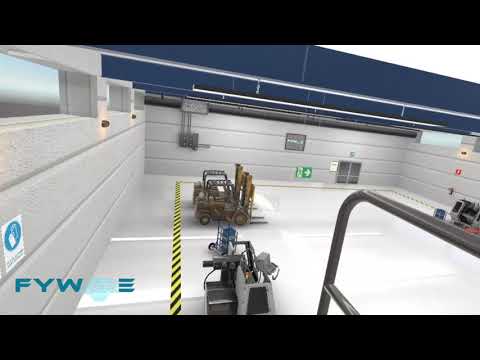
Industrial VR proof of concept for repeatable forklift operation, material handling, route-following, and safe load transportation practice in a controlled virtual environment.
Role & Ownership
Served as the sole Unity / XR Developer with complete PoC ownership across simulation architecture, forklift physics, VR controls, load handling, environment integration, training logic, optimization, testing, and iterative improvement.
Problem
Real-world forklift training involves operational risks, equipment availability, instructor supervision, and limited opportunities to repeat incorrect maneuvers, collisions, route deviations, and load-handling scenarios safely.
Engineering Challenge
Reproduce credible forklift behavior while accounting for steering, braking, fork manipulation, changing load weight, dynamic center-of-mass behavior, collisions, route validation, training objectives, and VR comfort within a repeatable industrial training simulation.
Engineering Approach
Vehicle Controls and Physics
Built the vehicle-control model around acceleration, braking, steering response, traction, handling, and constrained movement. Connected an interactive steering wheel and multi-speed gear lever supporting forward, neutral, and reverse operation.
Fork and Load Handling
Implemented independent fork height, tilt, and lifting controls for physics-based pickup, transportation, positioning, and delivery. Rigidbodies, colliders, constraints, and fork interactions were tuned for stable material handling.
Weight-Dependent Dynamics
Applied weight limits and dynamic center-of-mass adjustments so load mass affected acceleration, braking distance, steering response, handling, and stability during turns, braking, acceleration, and elevated-load transportation.
Training and Validation
Combined route and deviation detection with a configurable correction window, objectives, checkpoints, and pickup, transportation, and delivery validation. Collision detection, penalties, reset logic, and recovery states supported repeatable exercises.
Feedback, Comfort and Performance
Used visual, audio, and haptic feedback for interactions, collisions, warnings, errors, and completion. Integrated the environment and training objects, baked lighting, optimized polygons, draw calls, and physics, and iteratively tuned movement, camera behavior, steering, load stability, collisions, fork response, and VR comfort beyond the early video version.
Outcome
Delivered a complete and functional industrial VR proof of concept with physics-based vehicle and load behavior, structured training validation, responsive feedback, and VR comfort refinements.
Industrial XR simulation for practicing the ordered isolation, locking, verification, unlocking, and restoration of an industrial valve with immediate procedural feedback.
Role & Ownership
Worked as the Unity / XR Engineer responsible for procedural interaction logic, validation and feedback systems, Meta Quest 2 and OpenXR integration, industrial model integration, lighting, and functional delivery.
Problem
Practicing critical Lockout/Tagout procedures without interacting with operational equipment or being exposed to real-world hazards.
Engineering Challenge
Coordinate an ordered safety procedure in XR where each action depends on completion and validation of previous steps, while blocking invalid interactions and providing immediate feedback without breaking the training flow.
Engineering Approach
Procedural Flow
Structured the isolation, locking, verification, unlocking, and restoration workflow as an ordered sequence with explicit progression and completion validation.
Validation and Feedback
Validated required steps and blocked advancement when actions were incomplete or incorrect. Guidance and interactive feedback communicated valid actions, blocked interactions, procedural errors, and completion states.
XR Integration and Performance
Developed the experience in Unity and C# for Meta Quest 2 using OpenXR. Adapted MRTK-based interaction patterns to the Meta Quest 2 / OpenXR target workflow, integrated industrial 3D models, and used baked lighting to balance visual quality with standalone XR performance.
Outcome
Delivered a functional standalone XR training prototype that enforces ordered progression, validates required steps, blocks invalid interactions, and provides immediate procedural feedback.
Served as a developer for the Epic Online Services Unity plugin, contributing to
7 public production releases, owning 1 release end-to-end, and validating
5 operating systems: Windows, Android, macOS, iOS, and Linux.
GitHub ActionsUnity Test FrameworkGitAzure DevOpsJira
Platforms: Windows · Android
· macOS · iOS
· Linux · Switch
· Xbox · PlayStation
Career path
Experience
February 2025 – July 2026Apex Systems
Client: Epic Games
Senior Game Engineer - Epic Online Services Unity Plugin
Served as a developer for the Epic Online Services Unity plugin, contributing to SDK integration,
cross-platform architecture, incident investigation, release validation, and production delivery
across five operating systems.
Contributed to 7 public production releases and owned 1 release end-to-end.
Developed and validated functionality across Windows, Android, macOS, iOS, and Linux.
Integrated EOS SDK versions and participated in release scope, defect, compatibility, and hotfix decisions.
Senior Game Engineer — Epic Online Services Unity Plugin
Served as a developer for the Epic Online Services Unity plugin, responsible for EOS SDK
integration, cross-platform architecture, bug prioritization, incident investigation, and final
release validation. Contributed to seven public production releases, developed functionality across
at least five releases, and owned one release end-to-end.
Release ownership & technical leadership
Contributed to 7 public production releases and owned one release end-to-end, covering SDK
integration, implementation, testing, validation, packaging, and publication.
Defined technical architecture, integrated new EOS SDK versions, prioritized defects,
investigated developer-reported incidents, and performed final pre-release validation.
Participated in release scope, defect prioritization, minimum compatibility, and hotfix
decisions.
Expanded from Windows-specific development to cross-platform ownership and validation across
five operating systems.
Received positive feedback from technical leadership for delivery quality, technical judgment,
and leadership potential.
Cross-platform engineering & quality
Developed and validated plugin functionality across Windows, Android, macOS, iOS, and Linux
while supporting multiple Unity LTS versions.
Added Android support for devices using 16 KB memory pages, Custom Invites Disable Requests,
and high-frequency peer-to-peer functionality.
Fixed EOS configuration persistence so Unity UI changes were saved to the corresponding JSON
configuration file.
Diagnosed an Android DEX failure caused by an AAR compiled with JDK 21+ bytecode requiring
com.android.tools:r8:8.1.56, identifying the root cause through Android Studio.
Resolved non-Windows build failures caused by the EOS_DISABLE scripting symbol by
implementing safeguards for every supported platform.
Investigated build-blocking and runtime issues involving DEXing, native plugins, IL2CPP, Mono,
authentication flows, platform loaders, dependencies, and build configuration.
Automated and maintained compilation workflows, unit tests, PlayMode tests, and standalone
tests locally and through continuous integration; detected a macOS regression before release.
Developer support & lasting impact
Handled approximately 12 developer-reported issues per month through the Epic Games developer
forums, providing fixes, documentation, workarounds, and root-cause analysis.
Converted recurring developer and studio issues into permanent changes included in subsequent
public plugin releases.
Led the architecture and delivery of immersive training and digital learning solutions while
managing a six-person multidisciplinary team and remaining hands-on across Unity, XR, telemetry,
reporting, backend integration, and client-facing technical planning.
Led the architecture and delivery of 4 client-used Unity projects.
Managed 6 professionals across software development, UX/UI design, and 3D art.
Owned task assignment, estimates, code reviews, architecture approval, QA coordination, and final delivery.
Designed interaction, persistence, telemetry, scoring, reporting, and backend integration architectures.
Built XR applications using OpenXR, XR Interaction Toolkit, SteamVR, and Meta XR.
Led demonstrations, requirements, progress reviews, and delivery meetings in English and Spanish.
UnityC#OpenXRAzureFirebaseTechnical Leadership
Senior Unity Developer / Technical Lead
Led the technical architecture and delivery of immersive training and digital learning solutions
for government defense and international education clients. Managed a six-person multidisciplinary
team while remaining hands-on across Unity development, system architecture, telemetry, scoring,
reporting, device integration, backend communication, and client-facing technical planning.
Key achievements
Led the architecture and delivery of 4 client-used Unity projects for government defense and
international education organizations.
Managed 6 professionals across software development, UX/UI design, and 3D art, with direct
responsibility for task assignment, estimates, code reviews, architecture approval, performance
evaluations, QA coordination, and final delivery.
Defined architectures for interaction systems, scene organization, persistence, telemetry,
scoring, reporting, device integration, backend communication, and reusable software patterns.
Built Unity applications with OpenXR, XR Interaction Toolkit, SteamVR, and Meta XR, including
training and assessment systems that captured user actions, progress, performance data, scores,
and results.
Integrated backend and persistence services to store user activity and support reporting and
organizational monitoring.
Led technical demonstrations, progress reviews, requirements discussions, and delivery meetings
with clients in English and Spanish.
Translated client requirements into technical proposals, architecture decisions, estimates,
sprint plans, and implementation tasks.
Balanced technical leadership with hands-on development, integration troubleshooting, code
reviews, and validation of critical systems before delivery.
Cloud, Backend & AI Integration
Integrated Azure and Firebase services into Unity applications through C# SDKs and REST APIs, supporting authentication, persistent user data, cloud storage, telemetry, reporting, and AI-powered functionality.
Designed and implemented cloud-backed application architectures using Azure Functions, Cosmos DB, Blob Storage, Key Vault, and Application Insights for backend processing, persistence, secure configuration, storage, and observability.
Integrated Microsoft Foundry with Azure OpenAI models into Unity-based workflows while using Firebase Authentication, Firestore, Cloud Storage, and Cloud Functions for complementary application services.
Promoted after one year from Unity Developer to Industrial Development Lead based on technical
expertise, consistent delivery, recovery of delayed projects, project estimation, mentorship,
client communication, and contribution to the department’s growth.
Industrial Development Lead
January 2021 – October 2023
Unity Developer
December 2019 – January 2021
Promoted from Unity Developer to Industrial Development Lead after 1 year.
Led up to 15 direct reports across Unity development, 3D art, animation, and UX/UI.
Managed up to 6 concurrent industrial XR projects.
Held final authority over architecture, technical decisions, quality, staffing, and delivery.
Promoted after one year from Unity Developer to Industrial Development Lead based on technical
expertise, consistent project delivery, recovery of delayed projects, client communication,
project estimation, mentorship, informal leadership, and contribution to the department’s growth.
The promotion included a formal change in position, responsibilities, and salary.
All client and project names remain confidential.
Department leadership
Industrial Development Lead
January 2021 – October 2023
Led Fyware’s Industrial Development Department, managing up to 15 direct-report Unity developers,
3D artists, animators, and UX/UI designers across as many as six concurrent industrial XR
projects. Held final responsibility for technical execution, architecture, staffing, project
planning, delivery schedules, team performance, and client satisfaction while remaining
hands-on in Unity and XR development.
Up to 15 direct reportsUnity developers, 3D artists, animators, and UX/UI designers
Up to 6 concurrent projectsStaffing, priorities, dependencies, schedules, and resource allocation
Highest technical authorityFinal architecture, technology, quality, and delivery approval
Leadership & Delivery
Owned technical planning, effort and staffing estimates, sprint planning, backlog
prioritization, daily meetings, progress tracking, risk management, and blocker resolution.
Maintained final responsibility for technical quality, delivery dates, team performance,
and client satisfaction through implementation, validation, delivery, real-world use, and
post-release support.
Reported risks and presented status, estimates, technical alternatives, and delivery plans
to project managers, sales, management, the CEO, and clients.
Coordinated client meetings, technical proposals, project reviews, requirement
clarification, delivery validation, and post-release support while protecting contractual
scope.
Architecture & Engineering
Approved or rejected technical decisions, system architectures, SDKs, plugins, devices,
hardware, and implementation approaches according to project requirements.
Defined and reviewed architectures using MVC, state machines, Observer, dependency
injection, and ScriptableObject-based systems.
Led code and architecture reviews, build validation, internal testing, QA coordination, and
final technical approval before client delivery.
Led industrial VR and AR solutions involving telemetry, scoring, user evaluation,
reporting, progress tracking, APIs, databases, cloud services, controllers, haptics,
cameras, and VR equipment.
Team Development
Evaluated performance through technical reviews, individual meetings, feedback,
mentorship, and personalized training and course roadmaps.
Participated in technical interviews, hiring decisions, candidate evaluation, onboarding,
promotions, and personnel termination processes.
Improved onboarding through shared standards, documented project structures, reusable
components, and defined development practices.
Processes Introduced
Introduced Scrum practices, clean-code standards, and SOLID principles where no formal agile
development process previously existed.
Authored the department’s coding standards and implemented code reviews, branching
strategies, Definition of Done, sprint planning, retrospectives, bug tracking, technical
reviews, testing checklists, performance evaluations, and structured estimation.
Created reusable project templates and shared architecture foundations, reducing
integration conflicts and enabling teams to reuse common modules.
Enabled earlier detection of bugs, performance issues, and integration risks; improved
project visibility and made estimates more consistent through structured planning,
tracking, reviews, and technical risk evaluation.
Developed complete industrial VR and AR applications and contributed specialized modules to
additional internal projects across manufacturing, robotics, industrial training, safety,
healthcare, art, entertainment, and real-estate visualization. Worked closely with the technical
lead on architecture while creating reusable systems adopted across subsequent projects.
XR Development
Delivered complete Unity-based VR and AR applications, functional prototypes, client
demonstrations, and specialized modules for additional confidential projects.
Built interaction systems, locomotion, grabbing and manipulation, physics behaviors,
machinery simulations, guided procedures, UI flows, training sequences, and multiplayer
functionality.
Developed evaluation, telemetry, scoring, reporting, progress tracking, persistence, API
integration, data visualization, animations, and user-interface systems.
Integrated 3D models, animations, controllers, haptic devices, cameras, VR equipment, APIs,
databases, servers, cloud services, and persistent user data.
Technical Ownership
Developed complete projects while contributing assigned modules to projects owned by other
teams, including real-estate visualization work requiring additional Unity and XR capacity.
Collaborated with the technical lead on architecture decisions and created reusable C#
components and development systems used in later company projects.
Demonstrated the ownership, delivery consistency, recovery of delayed projects, estimation,
mentorship, and client communication that led to formal promotion after one year.
Performance Optimization
Optimized draw calls, 3D models, baked lighting, occlusion culling, memory, object pooling,
shaders, and scene-loading times for target XR hardware.
Used Unity Profiler to identify rendering, CPU, GPU, and memory bottlenecks and maintain
stable runtime performance.
Authored an internal XR development and optimization guide covering rendering, lighting,
models, memory, code optimization, and runtime performance.
I had the privilege of managing Jessica during our time working together, and I can say without
hesitation that she is one of the most talented software engineers I've worked with. As a Senior
Software Engineer, she consistently demonstrated exceptional technical expertise, sound engineering
judgment, and a genuine passion for building quality software. She took ownership of critical
initiatives, proactively identified opportunities for improvement, and consistently raised the
quality bar for the entire team.
Bill FreelingLead Engineer at 5150 Games | Ex-Microsoft
Jessica is a terrific engineer and wonderful team member to work with. Her technical prowess
proved to be invaluable as we were tackling challenges across a wide array of specialties. She
is always very reliable and approachable when seeking guidance or discussing solutions, and I
would love the opportunity to work with her again in the future.
Connor BlaserSenior Software Engineer
Jessica is one of the best partners I have ever worked with. She is focused, with attention to
detail, and provides solutions to the problems that come her way. She is capable, responsible,
and can be counted on, knowing that the task will be much easier when she is on the team.
Jorge Luis CarvajalSoftware Engineer | Real-Time 3D Systems | Unity | XR | Digital Twins